Why most agency messaging fails before it ever gets read
Walk through ten agency websites and you’ll see the same story told ten slightly different ways.
Strategic. Creative. Results-driven. End-to-end. We grow your business.
None of it is wrong. All of it is forgettable.
From a client’s perspective, agency messaging often blends into one homogenous wall of promises, processes and platitudes. When that happens, you don’t get chosen for your thinking. You get compared on price, availability, or who replied first.
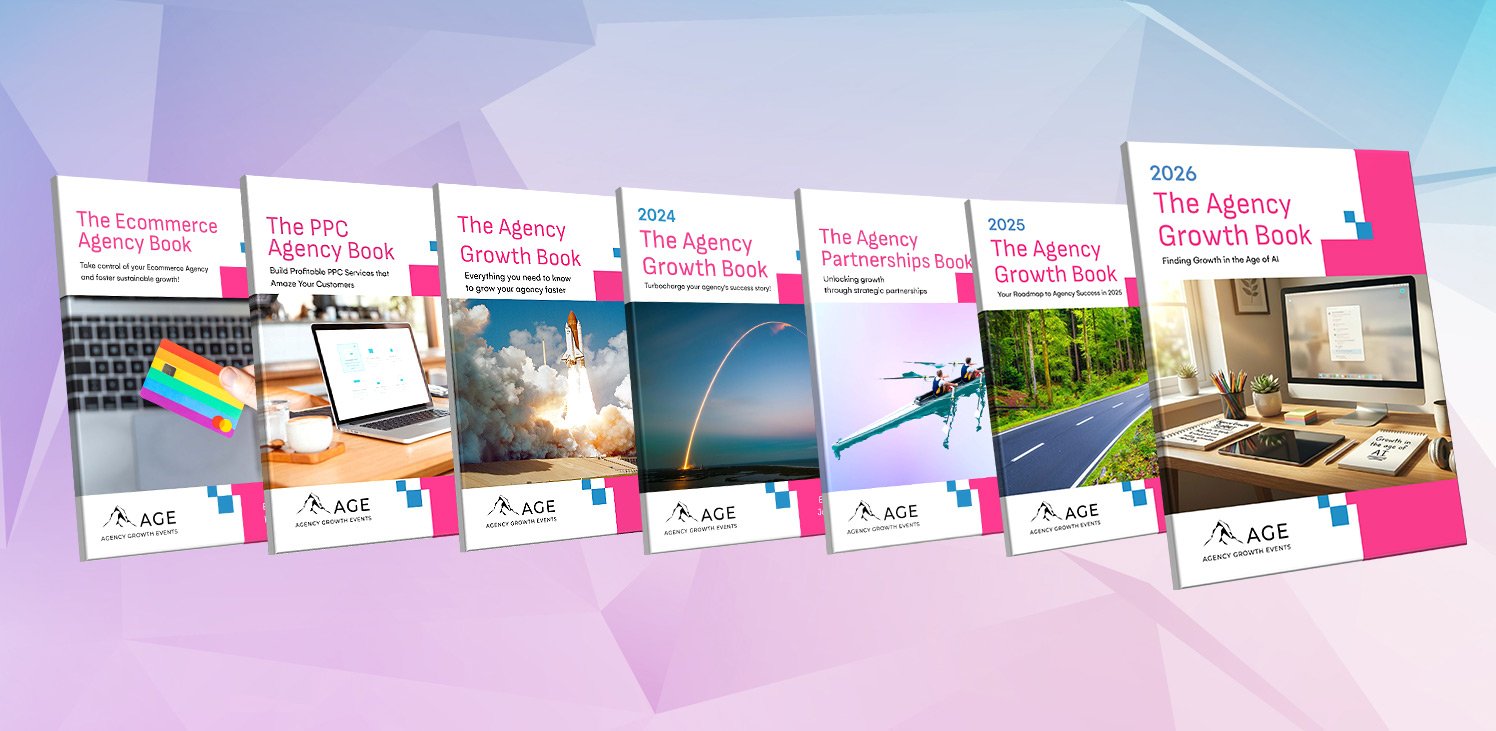
This was the focus of Roland Gurney’s session at Agency Growth Summit 2025, now also featured as a chapter in the Agency Growth Book: why agency messaging fails before it even gets read — and how to fix it.
Why this matters now
Buyers are more time-poor and more sceptical than ever. They scan, they don’t read. They filter, they don’t explore.
If your messaging looks like everyone else’s, it gets ignored before it gets considered.
This isn’t a design issue. It isn’t a copywriting issue.
It’s a positioning issue that shows up in your messaging.
The root problem: trying to speak to everyone
When you try to appeal to any client, in any sector, with any problem, your language becomes generic by default.
Strong messaging starts with a decision:
Who are you for, specifically?
Once that’s clear, everything else sharpens.
Five elements of messaging that actually lands
Across hundreds of agency audits, the same pattern appears. Effective messaging consistently does five things:
Speaks to someone specific
Clear audience choices make your website filter the right people in and the wrong people out.Tells the story of the client’s problem
Describe their situation, pressures and frustrations in their language, not yours.Introduces a clear, owned solution
Frame your approach as a defined system, process or framework — not a list of services.Explains why they need it now
Connect your work to what’s happening in their world today and the cost of inaction.Proves you can deliver
Use case studies and proof that reinforce the story you’ve told, not decorate the page.
What this looks like on a homepage
A strong homepage isn’t a brochure. It’s a guided narrative:
A positioning line that filters
A headline promising a meaningful, believable outcome
Their problem, in their world
Your approach, clearly framed
The outcomes it creates
Proof you’ve done it before
Reasons to act now
A call to action that mirrors the promise
When this structure is in place, the copy becomes easier to write because you’re advancing a story, not filling space.
The real shift: from brochure to buying conversation
Messaging is not self-expression. It’s a commercial tool.
When you speak to someone specific, name their problem, show a clear solution and prove it works, clients arrive ready to talk about fit — not fees.
If your website feels busy but ineffective, this is usually why.
The fix isn’t more words. It’s better decisions upstream and a clearer story downstream.
This session is available to watch alongside the video from Agency Growth Summit 2025 and is expanded further in the Agency Growth Book.
Watch the session, then download the book to go deeper into how to make your agency messaging actually do its job.